




|
Quantity
|
Total
|
||
|
|
|||
|
|
|||
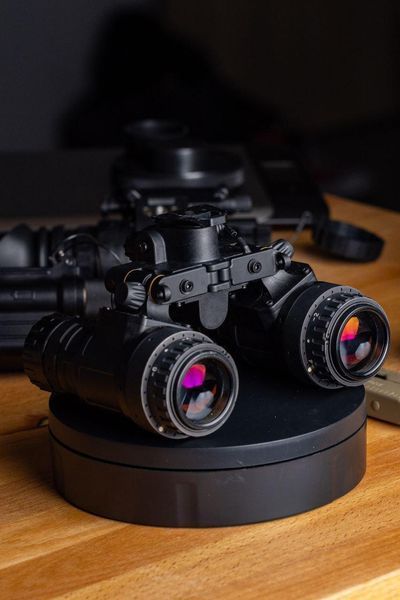
The combination of the ATN PVS-31 housing and Elbit XLS tubes is a well-balanced mid-professional Gen 3 configuration.
The XLS series delivers a noticeably cleaner image, higher SNR, and better detail reproduction compared to XLSH, while retaining affordability and high reliability.
In the PVS-31 housing, these tubes reveal their full potential: a lightweight dual-tube platform, convenient ergonomics and controls, moisture protection, and compatibility with modern helmet-mounting systems make the device practical and versatile for real-world use.
⚙️ Technical Specifications
| Parameter | Value |
|---|---|
| Housing | ATN PVS-31 |
| IIT Type | Elbit XLS |
| Phosphor | P45 (White Phosphor) |
| Tube Format | MX-10160 |
| Figure of Merit (FOM) | ≈ 1800–2200 |
| Signal-to-Noise Ratio (SNR) | ≈ 25–28 |
| Resolution (RES) | 64–72 lp/mm |
| Halo | ≤ 1.0 |
| EBI | ≤ 2.0 |
| Auto-Gating | Present |
| Housing Weight | ~450 g |
| Power Supply | 1× CR123A or external battery pack |
| Housing Features | Independent pod operation, IR illuminator, weather-resistant construction |
| Tube Service Life | ≈ 10,000 hours |
Comment / Quality Level
The Elbit XLS series is considered a “gold-standard” solution for professional users who require a high image-quality level without moving into premium PH/YH or fully contract-grade categories.
Advantages:
• clean and high-contrast image;
• stable FOM values in the 1800–2200 range for most units;
• lower EBI and higher SNR than XLSH;
• controlled halo performance near light sources;
• optimal choice for long-duration observation and nighttime mobility.
Paired with the ATN PVS-31 housing, this configuration offers a lightweight, ergonomic system that balances well on a helmet and performs effectively in dynamic environments.
Suitable For
• UAV operators who require improved detail clarity and image stability.
• Reconnaissance and observation teams working in complex lighting conditions.
• Patrol and security units that need a reliable, low-noise image.
• Training centers and instructors where stable parameters and repeatability are critical.
• Civilian users seeking the highest-quality mid-class Gen 3 performance.