


|
Quantity
|
Total
|
||
|
|
|||
|
|
|||
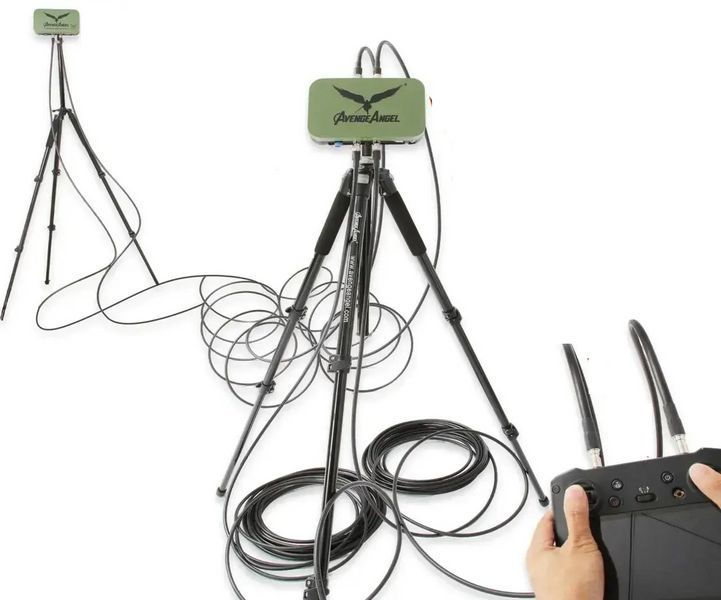
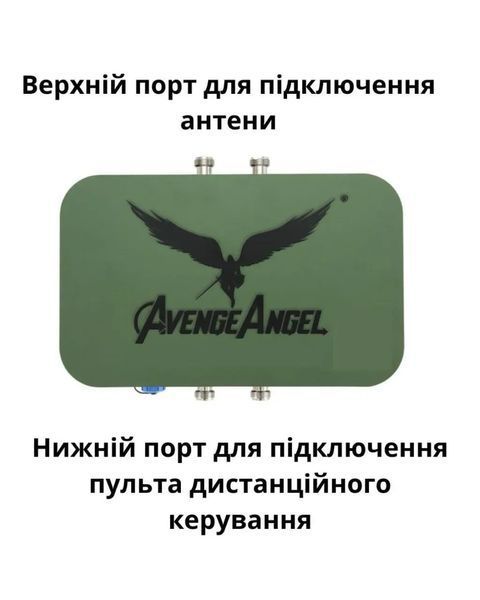
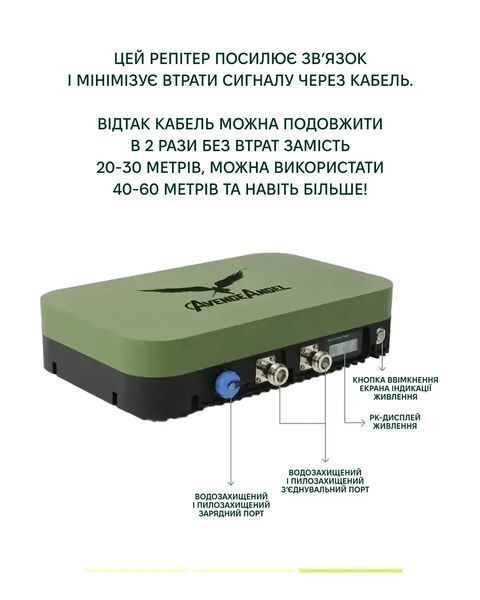
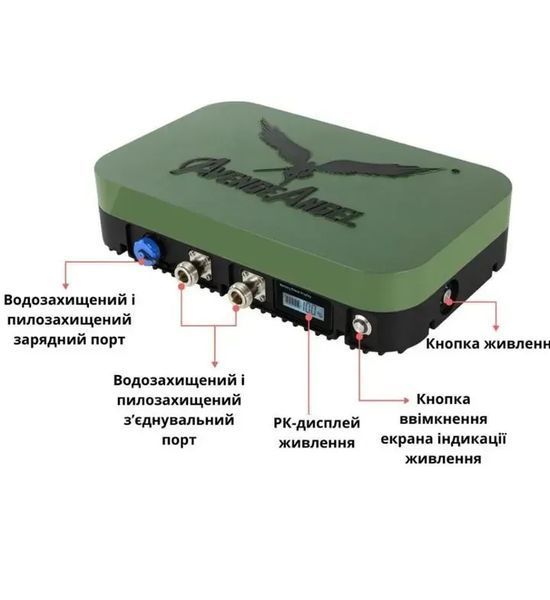
AvengeAngel Big Hulk Repeater is a professional wired signal repeater designed to stabilize and amplify communication between the controller and a remote antenna, especially when using long coaxial cables. The device compensates for signal loss over extended cable lengths, reduces link degradation, and ensures more predictable drone control in challenging RF environments. It is specifically designed to work in tandem with the AvengeAngel Big Hulk Plus antenna, guaranteeing optimal compatibility and stable performance without additional configuration.
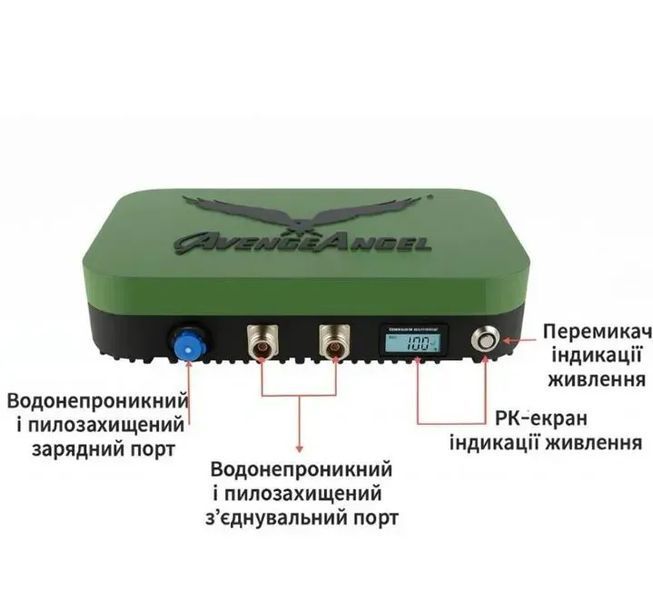
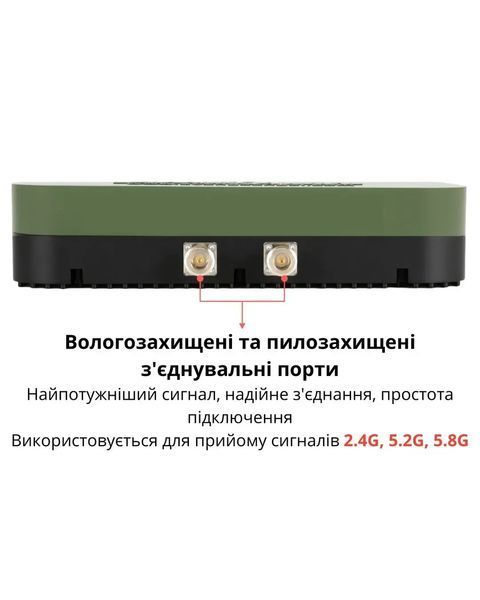
The IPX68-rated housing allows operation in rain, snow, and high humidity, while the built-in battery provides up to 3 hours of autonomous operation. Support for 2.4 GHz and 5.8 GHz bands, along with Wi-Fi and OcuSync protocols, makes the repeater a versatile solution for modern DJI drones and other UAV platforms where stable communication up to 20 km is critical.
We are a team of veterans
We test equipment in real operational conditions. Big Hulk Repeater has proven effective where long cables cause signal degradation. In active EW environments, performance always depends on terrain, interference levels, and the drone’s own hardware limitations.
Technical Specifications
| Parameter | Value |
|---|---|
| Device type | Wired signal repeater |
| Compatibility | AvengeAngel Big Hulk Plus |
| Supported bands | 2.4 GHz / 5.8 GHz |
| Supported protocols | Wi-Fi, OcuSync |
| Primary function | Compensation of cable signal loss |
| Maximum operational range | Up to 20 km (under favorable conditions) |
| Power supply | Built-in battery |
| Battery life | Up to 3 hours |
| Enclosure protection | IPX68 (dust and water resistant) |
| Operating conditions | Field use, all weather |
| Operating mode | Automatic, plug-and-play |
Comments
Big Hulk Repeater is most effective when antennas are placed far from the operator or when using cables of 15–30 meters or longer. It stabilizes signal levels, reduces dropouts, and improves overall control reliability.
Who it is for
DJI operators using remote antennas.
Military and tactical units.
Teams deploying long coaxial runs to antennas.
Reconnaissance, mapping, and search-and-rescue missions.