



|
Quantity
|
Total
|
||
|
|
|||
|
|
|||
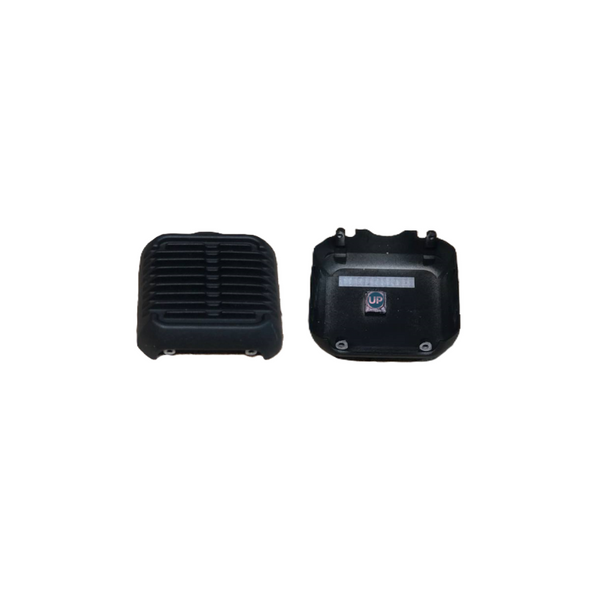
DJI Mavic 3 Camera Rear Shell is a plastic gimbal housing component that encloses the stabilizer board and internal elements of the optical unit from the rear. The component is designed with precise geometric tolerances to ensure tightness and protect internal electronics from dust, small debris, moisture, and mechanical damage during operations.
Replacing this part is necessary in case of cracks, deformations, or damage to the mounting holes after hard landings or collisions with obstacles. DJI Mavic 3 Camera Rear Shell restores the factory rigidity of the gimbal structure, which directly affects camera balancing accuracy and the smooth operation of stabilizer motors in the air.
🫡 We Are a Team of Veterans
We know that the camera gimbal is one of the most vulnerable parts of an unmanned aircraft during intensive operation in field conditions. Any play, crack, or displacement of the housing leads to excessive image vibration and overloads the stabilizer motors, which can eventually damage the expensive optical module. We offer DJI Mavic 3 Camera Rear Shell that fully matches the dimensions of the damaged factory part, allowing you to quickly return the aircraft to service without replacing the entire gimbal assembly.
⚙️ Technical Specifications
| Parameter | Value |
| Compatibility | DJI Mavic 3, DJI Mavic 3 Cine |
| Material | Polycarbonate, reinforced plastic |
| Purpose | Protection of the gimbal board rear side and optical block |
| Part Type | Camera Rear Cover (Rear Shell) |
| Color | Gray (Mavic 3 series factory color) |
| Weight | Under 5 g |
Commentary / Comments
The primary function of DJI Mavic 3 Camera Rear Shell is to physically protect the internal connection board and ribbon cables from external impacts. The material has sufficient toughness to absorb the energy of minor impacts, preventing the transfer of deformation directly to fragile electronic components.
Precise molding guarantees no gaps during assembly and complete alignment with the mounting screw holes. This eliminates gimbal binding along the axes of rotation and simplifies the repair process, even with basic tools for servicing unmanned platforms.