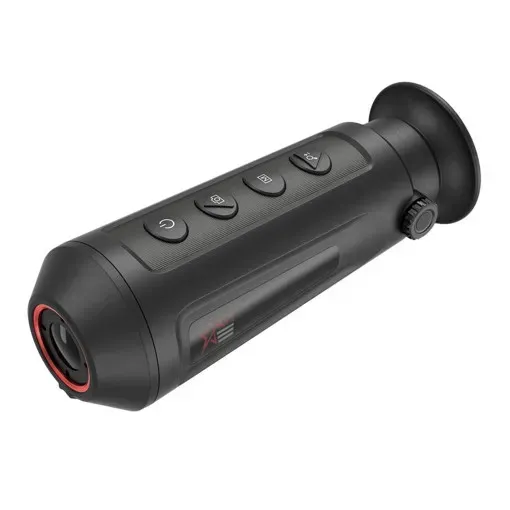
Thermal scopes are rapidly gaining popularity among hunters, law enforcement, and outdoor professionals. Their main advantage is that they detect heat, not light. Because of this, thermal imagers work in conditions where traditional optics or night vision systems become ineffective. One of the most common questions is: Can a thermal scope be used during the day?
Short answer: yes. Let’s break down why.

✅ What is a thermal scope and how does it work?
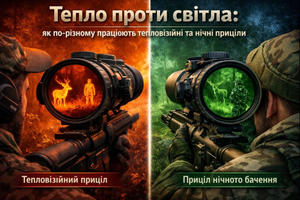
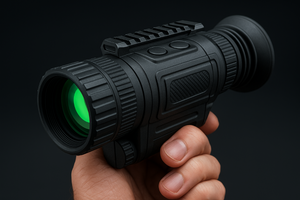
A thermal scope detects infrared radiation emitted by objects and converts it into a visible thermal image. Warm objects appear brighter, while cooler surfaces appear darker. The microbolometer sensor translates this thermal data into the image displayed to the user.
Unlike traditional optics, thermal imagers do not rely on visible light. Humans, animals, vehicles, or machinery remain clearly visible even in total darkness or complex terrain. That’s why thermal systems are widely used in hunting, security, and surveillance.
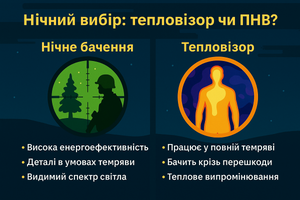
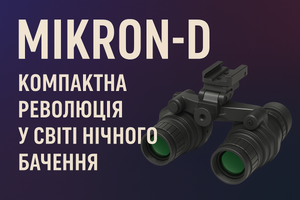
✅ How is a thermal scope different from night vision?
These technologies serve different purposes:
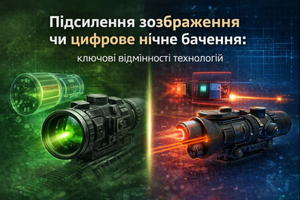
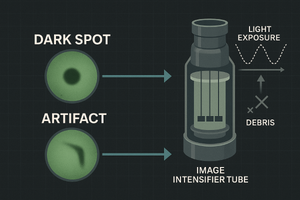
Night Vision (Image Intensifier Tubes):
-
amplifies existing light (moonlight, starlight, IR illumination);
-
sensitive to bright light and can be damaged;
-
does not work in total darkness without IR;
-
provides more detailed optical images.
Thermal Imaging:
-
detects heat, not light;
-
works equally well day and night;
-
immune to bright light;
-
excellent for spotting targets, but with fewer fine details.
The two systems complement each other rather than replace one another.
✅ Can you use a thermal scope during the day?
Yes — and safely. Thermal sensors are not harmed by sunlight.
However, during the day, sunlight heats the environment, reducing thermal contrast. For example, rocks, soil, or trees may heat up almost as much as an animal.
Even with reduced contrast, thermal scopes still:
✅ detect motion easily;
✅ highlight humans and animals;
✅ perform well in haze, dust, and vegetation.
Thus, thermal scopes remain effective tools for daytime use.
✅ Do thermal scopes work in all weather conditions?
Mostly yes, but some conditions can affect performance.
✅ Work well in:
-
nighttime conditions
-
cool environments
-
high thermal contrast
-
light fog, dust, light vegetation
❗ Performance decreases in:
-
heavy fog
-
strong rain
-
wet snow
Moisture absorbs infrared radiation, reducing clarity.
Extremely hot weather can also reduce contrast when everything reaches similar temperatures.
✅ How accurate are thermal scopes?
Thermal imagers excel at detection, but less at fine detail.
Strengths:
✅ large detection distances
✅ functions day and night
✅ highly effective at tracking movement
Limitations:
❌ fewer small details
❌ weaker depth perception
❌ harder target identification at extreme ranges
This is why many hunters combine thermal + traditional optics or use clip-on thermal attachments.
✅ Can thermal imagers see through glass or obstacles?
No.
Glass reflects infrared radiation, so a thermal imager shows a reflection rather than what’s behind the window.
It also cannot see through walls — though it may detect heat very close to a surface (pipes, engines).
✅ Conclusion
Thermal scopes are a universal tool that:
✅ operate day and night;
✅ resist bright light;
✅ detect targets at long distances;
✅ remain reliable where traditional optics fail.
Even though daytime heat reduces contrast, a thermal scope is still one of the most effective ways to detect living objects in any environment.