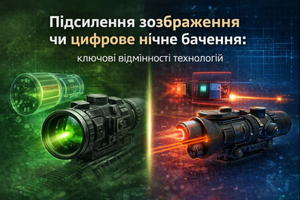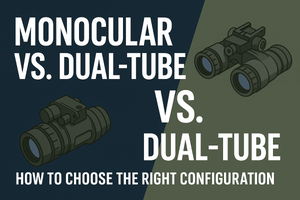
When it comes to effective vision in low-light conditions, there is no universal solution. The choice between a night vision monocular and binoculars is not driven by trends or price tags, but by one fundamental question: what exactly will you be doing at night.
For movement, navigation, and dynamic tasks, a monocular is usually the more efficient tool. For prolonged stationary observation, where comfort and distance estimation are critical, binoculars offer clear advantages.
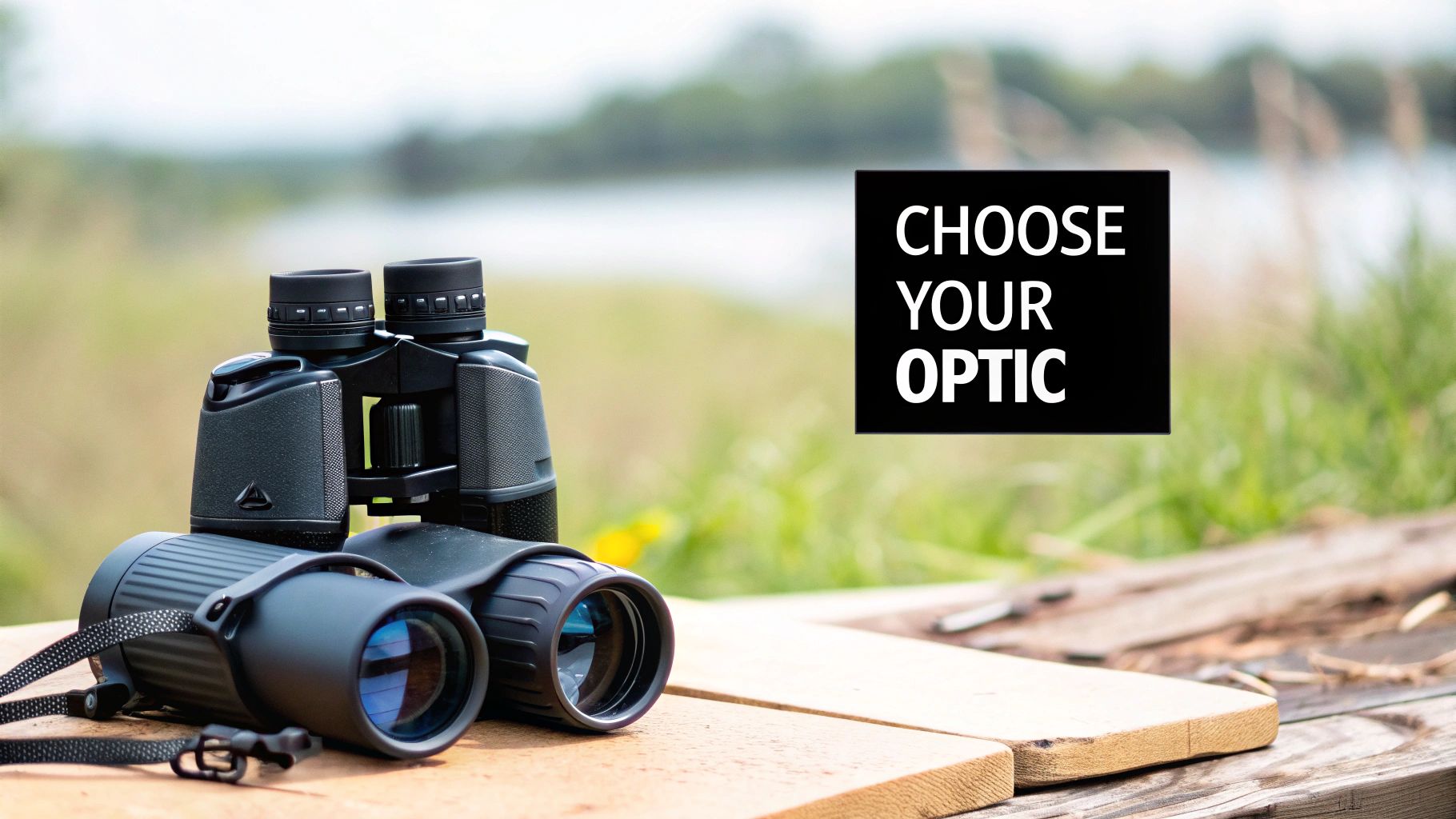
Choosing Night Vision Based on the Mission
Night vision devices are no longer limited to military use. They are widely employed in hunting, security, wildlife observation, and navigation.
-
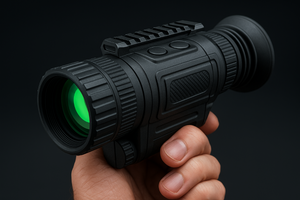
Monoculars prioritize mobility and fast response.
-
Binoculars focus on depth perception, comfort, and long-term observation.
Efficiency comes from matching the device to the mission.
Functional Differences
| Criteria | Monocular | Binoculars |
|---|---|---|
| Situational awareness | High | Moderate |
| Depth perception | Limited | Full stereoscopic |
| Mobility | Excellent | Lower |
| Long-term comfort | Moderate | High |
| Eye fatigue | Possible | Minimal |
Vision Processing Differences
A monocular feeds the image to one eye, allowing the other to remain naturally adapted to darkness. This preserves spatial awareness and flexibility.
Binoculars provide identical images to both eyes, creating natural depth perception and significantly reducing fatigue during extended observation.
Field Performance and Ergonomics
Monoculars are lightweight and ideal for movement.
Binoculars are heavier but far more comfortable for stationary, long-duration tasks.
Technology Matters More Than Format
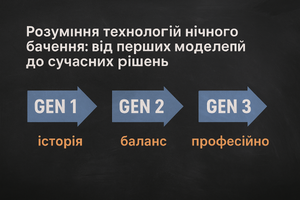
Image intensifier generation is more important than the device format.
A Gen 3 monocular will always outperform a Gen 1 binocular in image quality.
Matching the Device to the Task
Choose a monocular if:
-
you are constantly moving;
-
navigation and reaction speed are critical;
-
helmet-mounted use is required.
Choose binoculars if:
-
observation is stationary;
-
long viewing sessions are expected;
-
depth perception is essential.
Conclusion
Effective night vision is not about choosing the “best” device — it is about choosing the right tool for the task.
Monoculars and binoculars serve different roles and complement distinct operational scenarios.