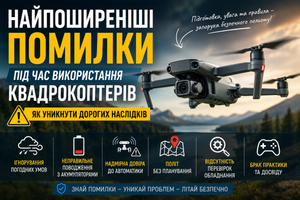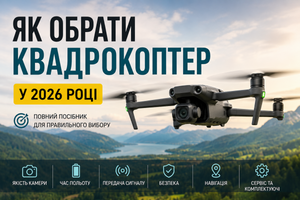
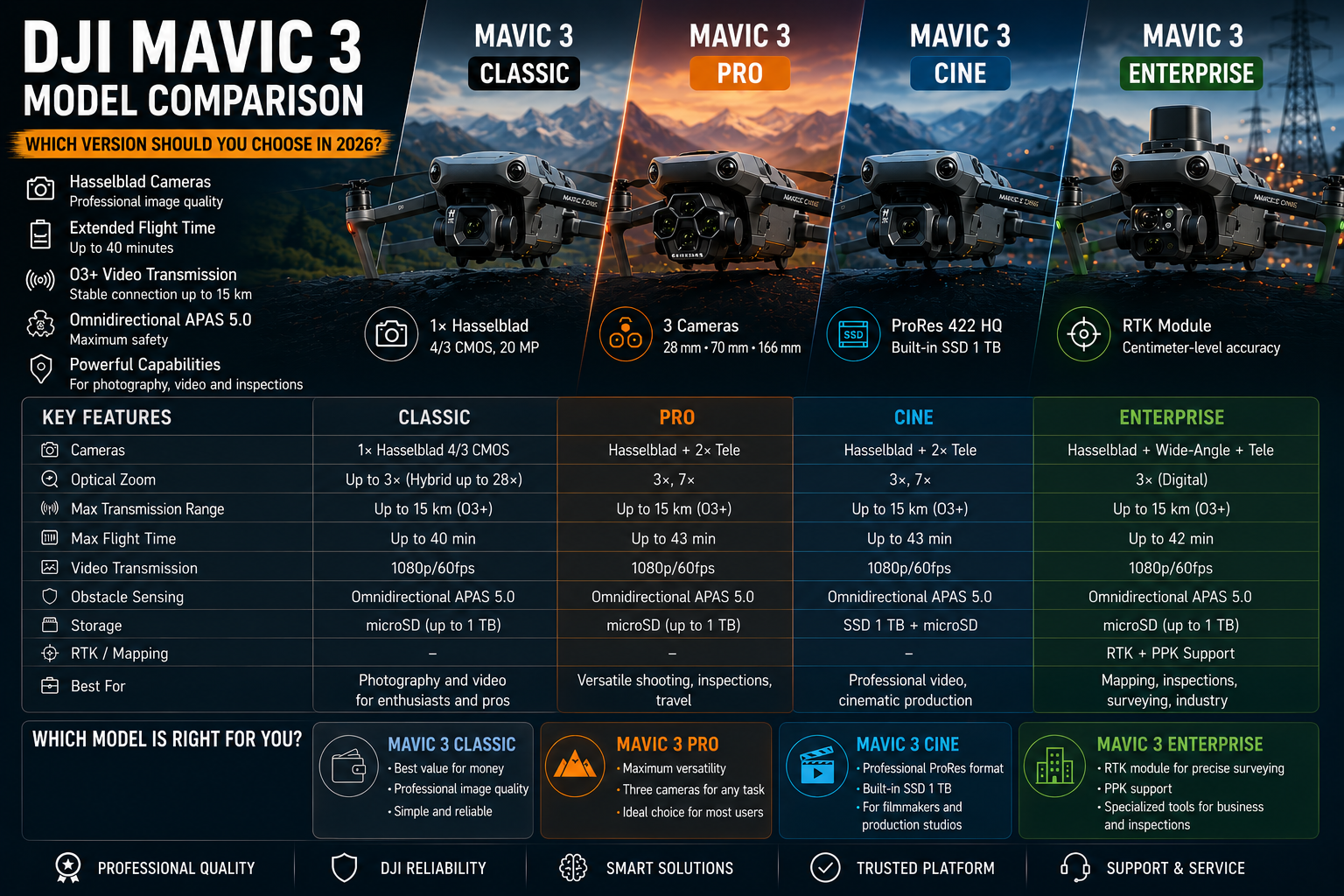
The DJI Mavic 3 series has become one of DJI's most successful drone platforms. Following the release of the original Mavic 3, DJI gradually expanded the lineup with the Classic, Pro, Cine, and Enterprise models. At first glance, these drones may appear very similar, but in reality, each version was designed for different operational requirements.
That is why it is important to understand not only the technical specifications but also the practical advantages of each model before making a purchase.
In this review, we compare all current DJI Mavic 3 variants and determine which one is best suited for different applications.
Cameras and Optics
⭐⭐⭐⭐⭐ Mavic 3 Pro
⭐⭐⭐⭐⭐ Mavic 3 Cine
⭐⭐⭐⭐ Mavic 3 Classic
⭐⭐⭐⭐ Mavic 3 Enterprise
The camera system is the primary reason behind the popularity of the Mavic 3 series.
The Mavic 3 Classic features the legendary 4/3 CMOS Hasselblad camera while eliminating additional lenses. This significantly reduces the cost without sacrificing the outstanding image quality that made the Mavic 3 famous.
The Mavic 3 Pro became a breakthrough model thanks to its triple-camera system:
- Main Hasselblad camera
- Medium telephoto camera
- Long-range telephoto camera
The Mavic 3 Cine uses a similar camera setup but focuses on professional video production.
The Enterprise version is designed more for practical and technical operations, meaning its advantages extend beyond the camera system alone.
Summary: If maximum versatility is your priority, the Mavic 3 Pro is the clear winner. It provides unmatched flexibility across multiple focal lengths without requiring repositioning of the aircraft.
Photo and Video Quality
⭐⭐⭐⭐⭐ Mavic 3 Pro
⭐⭐⭐⭐⭐ Mavic 3 Cine
⭐⭐⭐⭐⭐ Mavic 3 Classic
⭐⭐⭐⭐ Mavic 3 Enterprise
All models utilize high-quality sensors and advanced image-processing technologies.
Key advantages include:
- Wide dynamic range
- Natural color reproduction
- Excellent detail
- Strong performance in challenging lighting conditions
The difference in image quality between the Pro and Classic versions is minimal when using the main Hasselblad camera.
Summary: For most users, image quality between the Classic and Pro models will be virtually identical. The real difference lies in camera flexibility rather than image quality itself.
Optical Zoom Capabilities
⭐⭐⭐⭐⭐ Mavic 3 Pro
⭐⭐⭐⭐ Mavic 3 Enterprise
⭐⭐⭐ Mavic 3 Cine
⭐⭐ Mavic 3 Classic
This is where the Mavic 3 Pro truly separates itself from the rest of the lineup.
Its triple-camera system allows operators to work efficiently at multiple zoom levels without changing aircraft position.
Summary: If observing distant subjects with greater detail is important, the Mavic 3 Pro confidently takes first place.
Flight Endurance
⭐⭐⭐⭐⭐ All Models
DJI has created one of the most efficient drone platforms in its class.
Average real-world flight time:
- 30–40 minutes
- Depending on weather conditions
- Depending on flight style
The difference between models is generally only a few minutes.
Summary: Flight endurance is not a deciding factor when choosing between Mavic 3 models, as all versions perform at a very similar level.
Signal Transmission
⭐⭐⭐⭐⭐ Mavic 3 Pro
⭐⭐⭐⭐⭐ Mavic 3 Enterprise
⭐⭐⭐⭐⭐ Mavic 3 Cine
⭐⭐⭐⭐⭐ Mavic 3 Classic
All members of the Mavic 3 family utilize DJI's advanced transmission technologies.
Advantages include:
- Stable video feed
- Low latency
- Reliable performance in challenging environments
- High-quality image transmission over long distances
Summary: Signal quality is consistently excellent across the entire Mavic 3 lineup.
Low-Light Performance
⭐⭐⭐⭐⭐ Mavic 3 Pro
⭐⭐⭐⭐⭐ Mavic 3 Cine
⭐⭐⭐⭐⭐ Mavic 3 Classic
⭐⭐⭐⭐ Enterprise
The large Hasselblad sensor delivers impressive results even after sunset.
Key benefits include:
- Low image noise
- Excellent detail retention
- Strong dynamic range
Summary: The Mavic 3 platform remains one of the strongest compact drone systems available for low-light operation.
Ease of Use
⭐⭐⭐⭐⭐ Mavic 3 Classic
⭐⭐⭐⭐ Mavic 3 Pro
⭐⭐⭐⭐ Mavic 3 Cine
⭐⭐⭐ Mavic 3 Enterprise
The Classic version features the simplest configuration in the lineup.
Fewer functions mean:
- Faster learning curve
- Simpler menus
- Reduced training requirements
The Enterprise version is designed for professional users and includes additional specialized functions.
Summary: For newcomers, the Mavic 3 Classic offers the most user-friendly experience.
Intelligent Flight Modes
⭐⭐⭐⭐⭐ Mavic 3 Pro
⭐⭐⭐⭐⭐ Mavic 3 Cine
⭐⭐⭐⭐ Mavic 3 Classic
⭐⭐⭐⭐⭐ Mavic 3 Enterprise
The Mavic 3 series offers a comprehensive suite of intelligent flight features.
These include:
- ActiveTrack
- Waypoint Missions
- Cruise Control
- Automated flight routes
- Intelligent subject tracking
Summary: The Pro and Enterprise models offer the most advanced feature sets within the series.
Mapping and Coordinate-Based Operations
⭐⭐⭐⭐⭐ Mavic 3 Enterprise
⭐⭐⭐ Mavic 3 Pro
⭐⭐⭐ Mavic 3 Cine
⭐⭐ Mavic 3 Classic
This category is where the Enterprise model clearly dominates.
It was specifically designed for:
- Mapping
- Coordinate-based operations
- Large-area inspections
- Technical and industrial applications
Summary: For specialized professional work, the Enterprise version is the strongest model in the entire lineup.
Professional Video Production
⭐⭐⭐⭐⭐ Mavic 3 Cine
⭐⭐⭐⭐⭐ Mavic 3 Pro
⭐⭐⭐⭐ Mavic 3 Classic
⭐⭐⭐ Mavic 3 Enterprise
The Mavic 3 Cine was built specifically for professional content creation.
Key advantages include:
- Apple ProRes support
- Large built-in SSD storage
- Advanced color-grading workflows
- Professional production capabilities
Summary: If commercial video production is your primary goal, the Cine remains the best choice in the series.
Platform Reliability
⭐⭐⭐⭐⭐ Entire Series
All models are built on the same platform and share DJI's safety philosophy.
Advantages include:
- Omnidirectional obstacle sensing
- Stable firmware
- High manufacturing quality
- Proven airframe design
Summary: The Mavic 3 series is widely regarded as one of the most reliable compact drone platforms available today.
Repairability and Maintenance
⭐⭐⭐⭐⭐ Mavic 3 Classic
⭐⭐⭐⭐ Mavic 3 Pro
⭐⭐⭐⭐ Mavic 3 Enterprise
⭐⭐⭐ Mavic 3 Cine
The more complex the system, the more expensive maintenance becomes.
The Classic model features the simplest design and the fewest costly components.
Summary: In terms of long-term ownership costs, the Mavic 3 Classic is often the most economical option.
Value for Money
⭐⭐⭐⭐⭐ Mavic 3 Classic
⭐⭐⭐⭐ Mavic 3 Enterprise
⭐⭐⭐⭐ Mavic 3 Pro
⭐⭐⭐ Mavic 3 Cine
The Classic is frequently regarded as the best-value drone in the entire lineup.
Users receive:
- Hasselblad camera quality
- Excellent endurance
- All core Mavic 3 platform advantages
while paying significantly less than for higher-end variants.
Summary: For most buyers, the Mavic 3 Classic delivers the best balance between price and capability.
Overall Ranking
🥇 DJI Mavic 3 Pro — Best All-Around Model
Ideal for users seeking maximum versatility from a single platform and the ability to handle a wide variety of shooting scenarios.
🥈 DJI Mavic 3 Classic — Best Value for Money
The perfect choice for those who want the legendary Hasselblad camera without paying for additional features they may never use.
🥉 DJI Mavic 3 Enterprise — Best for Professional Technical Operations
Designed for mapping, coordinate-based workflows, and large-scale inspections.
🏅 DJI Mavic 3 Cine — Best for Professional Video Production
The preferred choice for studios, production teams, and creators working with professional video formats.
Conclusion
The DJI Mavic 3 lineup demonstrates how diverse drones built on the same platform can become. Each model has its own specialization and is designed for specific operational needs.
If maximum versatility is your priority, the Mavic 3 Pro is the best choice. If value for money is the deciding factor, the Mavic 3 Classic remains the strongest option. For specialized technical applications, the Enterprise model takes the lead, while the Cine version is the most attractive solution for professional video production.
Ultimately, the right choice depends not on the number of features available, but on the tasks your drone will perform most often.