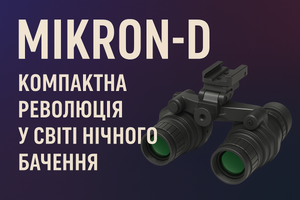
Night-vision technology has undergone a significant transformation over recent years. Broad access to information about device design, performance, and limitations has created a new type of consumer — far more informed and demanding than ever before. This shift has driven the increasing demand for features previously found only in high-end military systems. One of the most important of these is manual gain control, which allows users to adjust image brightness manually.
Today’s users expect more than just a functional device; they want a fully adaptable tool tailored to specific operational environments. In this context, manual gain marks the transition toward systems that offer operators greater control over the image intensifier tube. Adjusting the brightness enables the user to optimize performance in various lighting conditions, uneven terrain, or confined spaces where excessive brightness may pose a hazard.
This capability is especially valuable in tactical environments. In buildings, corridors, and tight structures, the ability to fine-tune image brightness significantly improves spatial awareness, directly impacting operator safety.
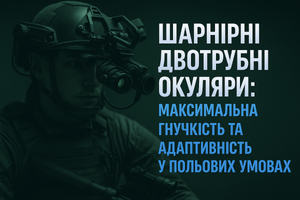
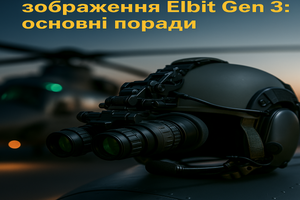
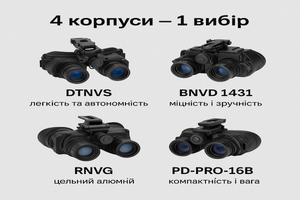
The growing interest in manual gain has led to the emergence of several new housing platforms, including Nocturn Industries Manticore, Low Light Innovations MH-1, and the new DTNVS version equipped with manual gain. As a result, customers now have access to diverse options in terms of design, weight, and functionality.
The evolution of the DTNVG and DTNVS platforms has been particularly influential. Introduced in 2016, the DTNVG became one of the first lightweight articulating housings with independent tube activation and integrated IR illumination. In 2020 it was replaced by the DTNVS — lighter, stronger, and more ergonomic. Yet both systems shared a limitation: the absence of manual gain.
This changed with the release of the DTNVS-MG in 2024. This upgraded version introduced full manual gain capability, elevating the DTNVS to a new level. Users can now fine-tune brightness according to their exact environment — a highly requested feature. The MG version retains compatibility with IPD stops and preserves the familiar DTNVS ergonomics.
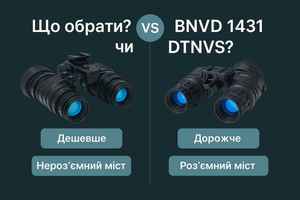
However, one limitation remains: DTNVS still does not support direct connection of an external battery pack without expensive aftermarket adapters.
The power-control logic has also been redesigned. A long press on the power button activates the indicators, after which the tubes are turned on by rotating the knob in either direction. Turning the knob clockwise or counter-clockwise adjusts the gain level. A double press toggles IR illumination, while a triple press switches to IR intensity adjustment mode. In this mode, the indicators blink alternately red and orange. The best way to observe intensity changes is by watching how shadows react.
To shut the system down, the user holds the knob for two seconds until the indicators signal the power-off sequence.
The introduction of the DTNVS-MG reflects a broader industry trend: users expect adaptable systems that provide real-time control over device performance. Manual gain is becoming a defining feature of modern dual-tube platforms and is likely to evolve into an industry standard in the near future.