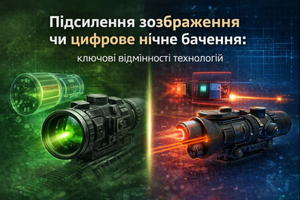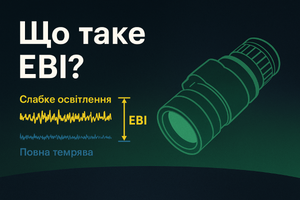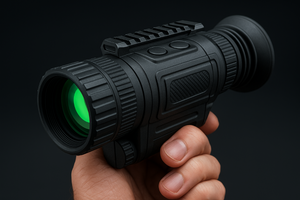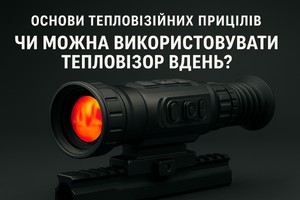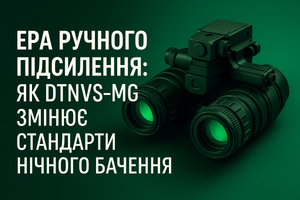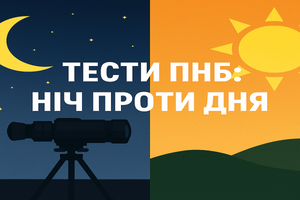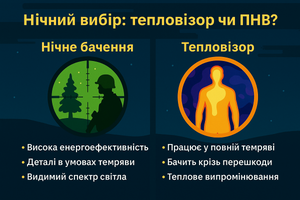
Thermal and night-vision scopes are often compared as alternatives, but in reality they are complementary instruments built on different physical principles. A thermal scope detects infrared heat contrast, while a night-vision scope amplifies ambient light and preserves visual detail and terrain structure.
Thermal Imaging — the tool for detection
A thermal scope excels when the goal is to find a target, not necessarily to identify it. It remains effective in total darkness, fog, smoke, light vegetation, or when objects are partially concealed. This makes thermal systems ideal for:
-
long-range detection and early spotting;
-
scanning large areas and monitoring movement;
-
search operations in low-visibility environments;
-
establishing situational awareness before closing distance.
The limitation is that thermal images lack fine detail — you see a heat silhouette rather than a recognizable form.
Night Vision — the tool for identification and navigation
Night-vision scopes preserve realistic visual perception of the environment, allowing the user to see shapes, textures, terrain, and obstacles. They are superior when the objective is:
-
positive target identification;
-
safe navigation and movement;
-
terrain awareness and coordination;
-
precision work at closer distances.
However, night vision depends on light — in complete darkness an IR illuminator is required, and fog or smoke can severely degrade clarity.
Extended Comparison Table
| Parameter | Thermal Scope | Night-Vision Scope |
|---|---|---|
| Physical principle | Detects infrared heat radiation | Amplifies ambient light |
| Primary role | Detection & acquisition | Identification & navigation |
| Zero-light capability | Excellent | Requires IR illumination |
| Fog / smoke / dust | Highly resilient | Strong performance loss |
| Foliage / bushes | Can reveal heat through light cover | Targets may disappear completely |
| Target detail | Low, silhouettes | High, clear visual detail |
| Environmental awareness | Low | High |
| Detection range | Long | Moderate |
| Identification range | Short | Strong at close / mid-range |
| Light dependency | None | High |
| Learning curve | Low | Moderate |
Conclusion:
Thermal finds the presence of a target — night vision tells you what it is. The most capable setups use both together.