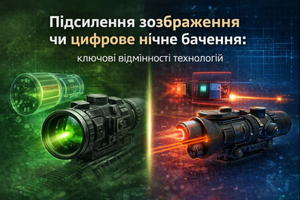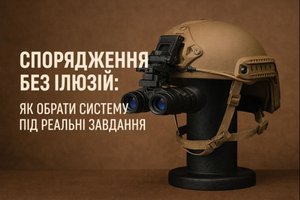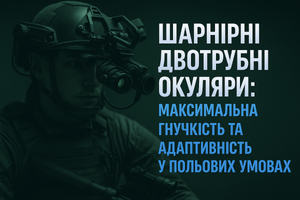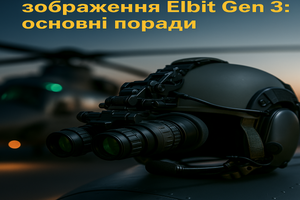
A modern night vision device is only one part of an effective setup. Without a properly selected helmet, a rigid mounting solution, and correct weight balance, even the highest-quality image intensifier tubes cannot perform at their full potential. The integration of helmet, mount, and night vision device determines whether the system becomes a natural extension of the user’s vision or a source of fatigue, image shake, and loss of control in darkness.
System foundation: helmet and front interface
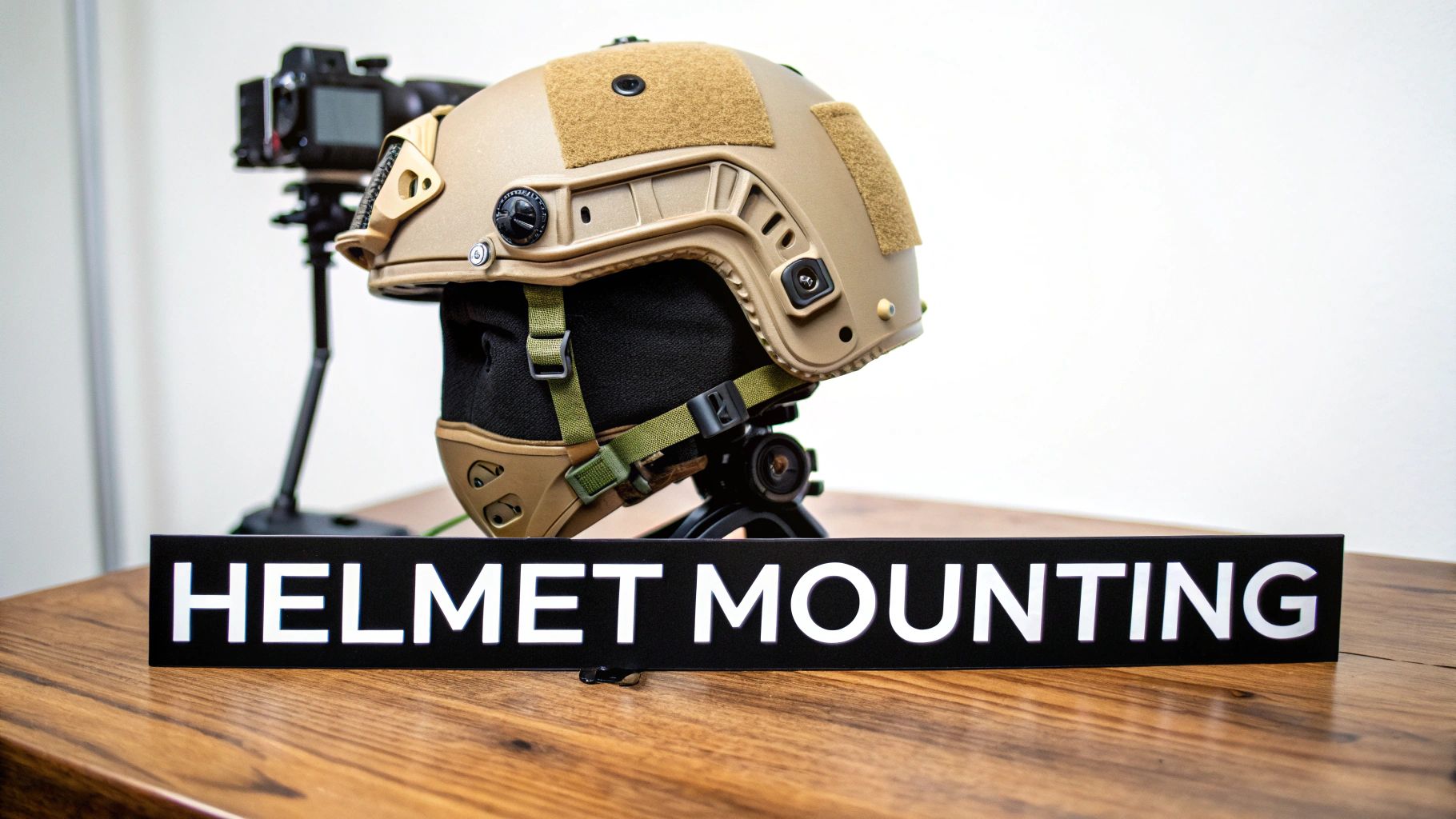
Every helmet-mounted night vision system starts with the helmet itself. In practical use, operators choose between ballistic helmets, designed to protect against fragments and projectiles, and non-ballistic bump helmets, which prioritize reduced weight and impact protection. Regardless of type, the critical element is the front interface — the shroud, either integrated into or mounted on the helmet shell.
This interface is the sole mechanical connection between the helmet and the night vision mount. Any looseness or instability at this point is magnified by the optics, resulting in image vibration and rapid eye fatigue. A high-quality, rigid shroud is therefore not an accessory but the structural foundation of the entire system.
The critical link: the night vision mount
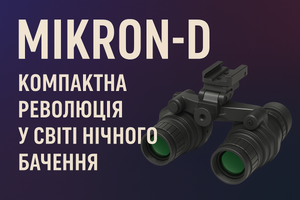
The mount serves as the articulated mechanical link between the helmet and the night vision device. For modern professional systems, the dovetail interface has become the industry standard, offering significantly greater rigidity and stability compared to legacy bayonet designs.
A well-engineered mount allows precise adjustment of the device position relative to the user’s eyes. Fore-and-aft travel, vertical adjustment, and tilt control are essential for setting proper eye relief, eliminating vignetting, and achieving a full, unobstructed field of view. These adjustments directly affect visual comfort and long-term performance.
Equally important is the breakaway feature. If the device becomes snagged on an obstacle, the mount detaches from the shroud under force, protecting both the equipment and the user’s neck from injury.
Balancing the system: applied physics
Mounting a night vision device at the front of the helmet creates a forward-biased moment that continuously pulls the head down. Without compensation, this results in neck strain and rapid fatigue during extended use.
Counterweights mounted at the rear of the helmet provide the necessary balance. These may take the form of dedicated weights or external battery packs that also extend operating time. A properly balanced helmet remains neutral on the head, even when looking downward, and does not require excessive strap tension. In real-world night operations, balance often determines whether an operator can work effectively for hours without loss of focus.
A unified system, not separate components
A helmet-mounted night vision setup must be treated as an integrated system. A solid helmet, a stable mount with precise adjustments, and correct counterbalancing transform a complex optical device into an intuitive, reliable tool. When built correctly, the system allows the user to concentrate on the mission rather than fighting their equipment in the dark.