When the effectiveness of your equipment directly affects mission success and personal safety, making the right choice becomes a matter of precision rather than preference. This article is designed to cut through marketing narratives and provide a scenario-based, practical framework for selecting equipment that truly fits real-world use.
The global market for specialized equipment continues to grow rapidly, offering an overwhelming number of models and configurations. While this expands availability, it also complicates decision-making. In this environment, brand names and price tags matter less than whether a system matches the actual conditions in which it will be used.
Core Equipment Categories
For clarity, observation and illumination systems can be divided into four fundamental categories, each serving a specific role.
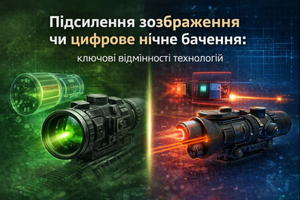
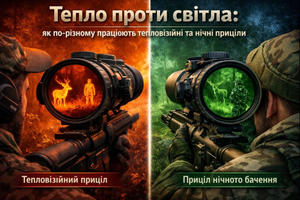
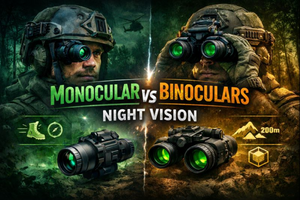
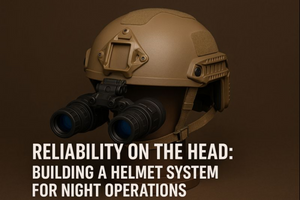
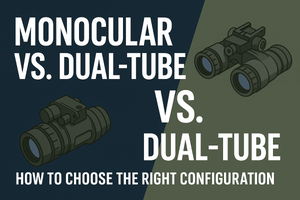
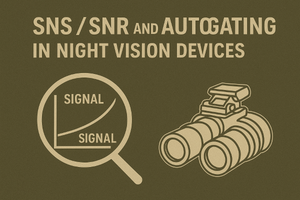
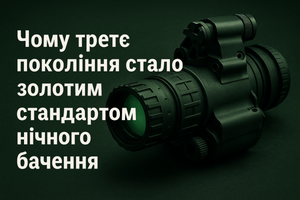
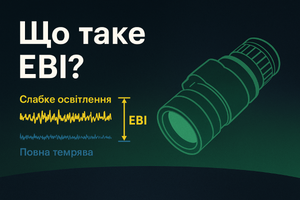
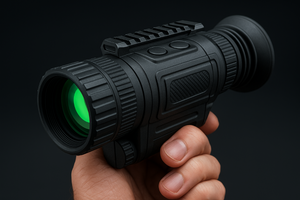
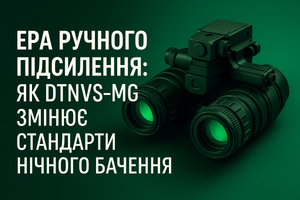
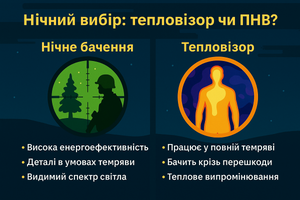
Night vision optics amplify available ambient light, allowing movement, navigation, and object recognition in low-light environments while preserving natural spatial perception.
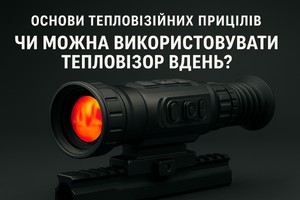
Thermal imaging devices detect heat signatures rather than light, enabling detection through complete darkness, smoke, foliage, or camouflage. However, identification accuracy depends heavily on sensor resolution.
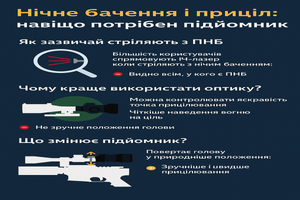
Laser systems are used for aiming, target designation, and coordination with night optics. They function as complementary tools rather than standalone solutions.
Weapon-mounted lights provide active illumination for close-range identification and navigation, though they can reveal the user’s position if used improperly.
The most important rule in equipment selection is context. A system optimized for confined spaces may perform poorly in open terrain.
Thermal Imaging: From Detection to Identification
Unlike night vision, thermal imaging does not rely on ambient light. Its performance is defined primarily by sensor resolution and refresh rate.
Entry-level sensors (256×192 or 320×240) allow rapid detection of human-sized heat signatures at moderate distances. High-resolution sensors (640×480) enable detailed recognition of shape, posture, and movement.
Refresh rate determines image smoothness. While 30 Hz is sufficient for static observation, 50–60 Hz is critical for tracking moving targets or operating while in motion.
Close and Medium Range Applications
Compact thermal optics designed for short to medium ranges typically feature wide fields of view and low base magnification. These systems prioritize speed, situational awareness, and mobility in environments such as forests, urban areas, or uneven terrain.
Their strength lies in rapid detection rather than fine detail.
Long-Range Observation and Area Control
Long-range systems use powerful lenses, narrow fields of view, and high-resolution sensors. They are designed for positive identification and behavioral analysis at extended distances, supporting surveillance and perimeter security tasks.
Matching the System to the Mission
There is no universal solution. Mobile scenarios demand lightweight, wide-angle systems, while long-range observation requires high-resolution optics.
The mission defines the equipment—not the other way around. This principle is the foundation of an informed and effective choice.