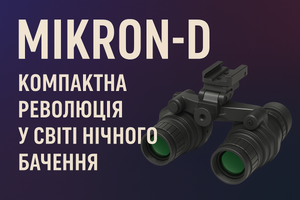
When exploring night-vision devices, most users inevitably encounter the topic of image intensifier tube specifications (IIT specs). This curiosity is natural: night vision is an expensive technology, and everyone wants to understand what they are paying for. However, the internet has developed a culture of misleading advice, where individual specifications are taken out of context and evaluated without understanding the real differences between tubes.
To make the right decision, it's important not only to know the numbers but also to understand how they work within the system — which parameters truly matter and why “perfect” specs are practically nonexistent.
1. Why specification discussions often mislead users
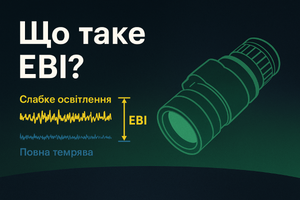
Online discussions frequently include recommendations to buy only tubes with certain numbers — for example, SNR 30+, HALO ≤1.0, EBI ≤1.0. But these “standards” ignore important context:
-
commenters often lack sufficient experience with different devices to give objective advice;
-
the information they repeat is frequently outdated or misinterpreted;
-
many recommendations are based not on experience but on spec sheets taken out of context;
-
tube owners tend to defend the models they personally use, creating bias.
This is the root of misinformation: numbers seem convincing, but they rarely reflect real-world performance.
2. Why high specs don’t always translate into visible improvement
A common myth: a tube with SNR 33 is significantly better than one with SNR 29.
In reality:
-
both may fall within the same performance class;
-
the difference is often invisible without controlled laboratory comparison;
-
other factors — such as the device housing or lens condition — can influence image quality more than a few points of SNR.
It’s similar to comparing two identical cars on a dyno: one may show slightly more horsepower, the other slightly less, but the real-world difference is negligible.
This is why even factory systems like the PVS-31A may have tubes with different characteristics, such as:
-
SNR: 33.4 and 39.2
-
EBI: 0.7 and 1.9
And this is not considered a defect.
3. Why spec sheet numbers represent only part of the story
Tube specifications are not a complete “portrait” of how the device performs.
They are simply reference points that help describe general capabilities.
Focusing on 2–3 numbers creates a misleading idea of “perfect tubes.” In reality:
-
parameters interact with each other;
-
performance depends on optics, housing, and lighting conditions;
-
minimum values are only lower thresholds, which real tubes often exceed significantly.
Modern technology allows most commercial and military tubes to perform far above what was considered excellent just a few years ago. For example, SNR 28 was once exceptional — today it’s normal.
4. How to avoid mistakes when choosing tubes
The key is realistic expectations.
Night vision is an investment, and within any budget there are optimal solutions.
The main advice:
-
evaluate not just numbers but the overall image quality;
-
compare tubes in real conditions, not just by their spec sheets;
-
consider the housing manufacturer as seriously as the tube manufacturer;
-
identify which features you truly need (power system, articulating housing, IR illuminator, etc.);
-
don’t chase the highest numbers — they don’t always provide proportional benefits.
If you need guidance or assistance in selecting specs for a specific task, consult a specialist — it's always better than relying on random online opinions.